
Criminal Court Cases in Boone County
Boone County Court hears misdemeanors, traffic matters, municipal ordinance cases, and the first phase of a felony prosecution. Boone County District Court handles felony trials and related postconviction matters. Both sit at the Boone County Courthouse in Albion. That split is more than a matter of court names. A felony may begin with a complaint and preliminary hearing in County Court, then move after bind-over to District Court under a different case number.
The court file follows the judicial case, not the whole criminal-history record. It can establish which charge was filed, whether the charge changed, how the defendant pleaded, and how the judge disposed of each count. The arresting officer's narrative remains with the Boone County Sheriff, Albion Police, St. Edward Police, or another arresting agency. A statewide NSP RAP sheet is yet another record. Readers tracing one event should keep those sources distinct.
Two Boone Court Case Numbers
One alleged felony can leave two Boone County court entries. County Court conducts the early felony proceeding and decides whether probable cause supports moving the matter onward. District Court then receives the felony prosecution. A name search that stops at one court level can therefore miss the later file or make an old County Court status look like the final result.
Write down every case number and court name shown in JUSTICE. Compare the offense dates, filed charges, attorneys, and register of actions before concluding that two results describe different events. The clerk can explain where a public file is kept, though court staff cannot interpret the case or give legal advice.
Boone County Case Record Searches
The Nebraska Judicial Branch JUSTICE service is the main online channel for Boone County case records. The one-time party-name search currently costs $17, returns up to 30 cases, remains available for three calendar days, and charges even when it finds no record. Frequent users have a separate subscriber service. Nebraska changed subscriber fees in 2026, so current prices should be checked in the live service.
Online data may lag by about a day. Start broad, then narrow a crowded result set. When the online service fails, use the free courthouse terminal, call the clerk, or ask for archived and non-imaged material. Certified copies also come from the clerk rather than from an online result screen.
| Search field | Use | Boone County note |
|---|---|---|
| Party name | Starts a one-time search | Use the legal name and broaden spelling if needed |
| Court type | Limits the trial court | Check both County and District Court |
| County | Limits statewide results | Select Boone |
| Case type and year | Narrows a long list | Use criminal or traffic and an estimated filing year |
| Case number | Opens an exact file | Keep each number from a transferred felony |
| Judge or attorney | Further narrows subscriber results | Use only when the name search is too broad |
Boone JUSTICE Search Choices
Online and counter access answer different needs. The one-time JUSTICE product suits an occasional name search. Subscriber access supports broader lists and case detail, while the courthouse kiosk avoids the online search charge. Official Judicial Branch pages have not always agreed on image access in the upgraded one-time product. Treat document-image availability as a live-service question.
The Judicial Branch court-record resource explains official record and set-aside channels. Its court-access page is shown below as a source view. It helps place the Boone County court case lookup within the state system.
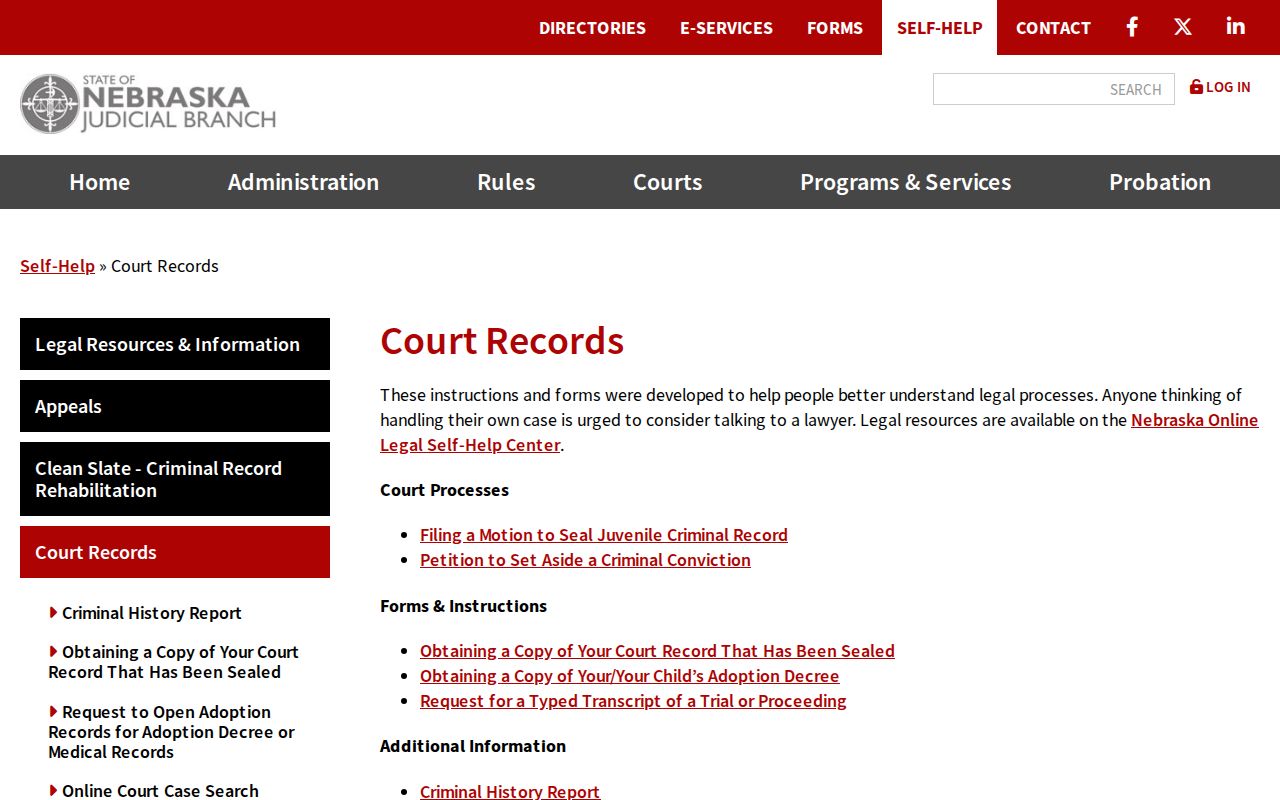
Use the clerk for a certified judgment, disposition, or a document that does not appear online.
What a Criminal Case File Contains
A Boone County criminal case file is a dated account of court action. The register of actions is the best starting point because it places complaints, hearings, motions, orders, pleas, and sentencing events in sequence. A status label by itself can be misleading when a later event changed the charge or closed one count but not another.
| Case header | Court, Boone County, case number, filing date, case type, status, and assigned judge. |
|---|---|
| Parties | State of Nebraska, defendant, and attorneys of record. |
| Offense entries | Count, description, statute, class, offense date, plea, and disposition. |
| Register of actions | Dated filings, hearings, orders, and other case events. |
| Documents | Public electronic images when the chosen product exposes them. |
| Financial entries | Costs or judgments assessed and payments recorded. |
| Restricted content | Protected identifiers, sealed files, juvenile material, and confidential documents are withheld. |
Note: A payment entry shows a financial event, not by itself the plea, disposition, or full result of a criminal charge.
Reading Boone Case Events
The register of actions uses short court terms. A complaint is the common first charging paper in County Court. An information is the prosecutor's felony charging paper in District Court. Bind-over means the felony matter moved from its preliminary stage toward District Court. Disposition means the result of a charge, while sentence is the consequence imposed after a conviction.
- Arraignment
- The hearing where the charge is stated and a plea is entered.
- Preliminary hearing
- The County Court screening of probable cause in a felony matter.
- Register of actions
- The chronological list of filings, hearings, and orders.
- Dismissal
- An end to a charge without conviction, subject to later access rules.
- Set aside
- Nebraska relief under section 29-2264 that does not erase every record.
Read the entries through the latest dated action. If the public image is absent or a disposition seems incomplete, call the Boone County clerk at 402-395-6184 and identify the court and case number.
Criminal Case Stages in Boone County
A Boone County court case grows in stages, and not every case follows the full route. A misdemeanor may remain in County Court. A felony generally begins there, then shifts to District Court after the preliminary phase. Pleas, dismissed counts, amended charges, and waived hearings can shorten or alter the path.
Charges Filed → Arraignment → Pretrial → Plea or Trial → Disposition → Sentencing
After sentencing, the case can gain probation entries, restitution events, set-aside filings, or appeal activity. The Boone County arrest search follows the agency and booking side of the same event, while the court file controls what was filed and decided.
Access Rules for Case Records
Most adult court case information is public, but access is not uniform across every document. Juvenile records, sealed matters, protected identifiers, confidential reports, and some victim information can be restricted. Nebraska section 29-3523 also changes public treatment of defined nonconviction outcomes. A court display and a public NSP RAP response may not change at the same moment.
A dismissal in JUSTICE should not be read as proof that every agency copy vanished. If an NSP history lacks the disposition, obtain a certified Boone County court result and follow the source-correction process. The clerk can provide the court copy; the originating agency must confirm its own source data before NSP updates the repository.
Nebraska's Public Records Act also depends on identifying the right custodian. The clerk holds judicial filings and orders. The Boone County Sheriff or arresting police agency holds its own investigative report, and NSP maintains the statewide fingerprint-supported compilation. Ask the clerk for the public judicial document rather than a police narrative. If a requested court item is not open, ask which access rule applies and whether a redacted version can be released.
Federal Cases Beyond Boone Courts
Federal charges are not Boone County court cases. They belong to the U.S. District Court for the District of Nebraska and use the federal PACER system. The official PACER service is shown below as the federal docket source.
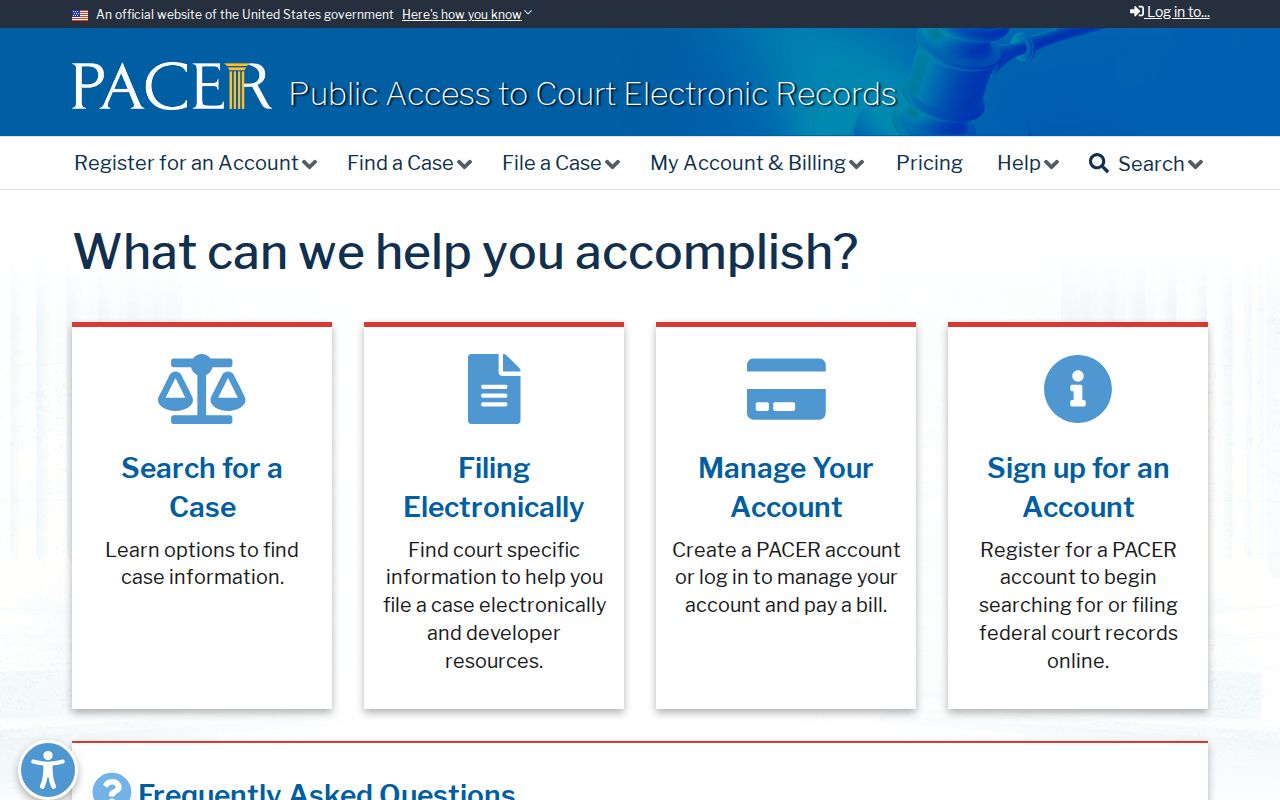
Sealed federal warrants and records ordinarily do not become public merely because a county search found nothing.
The U.S. District Court for the District of Nebraska provides the official court context shown here.
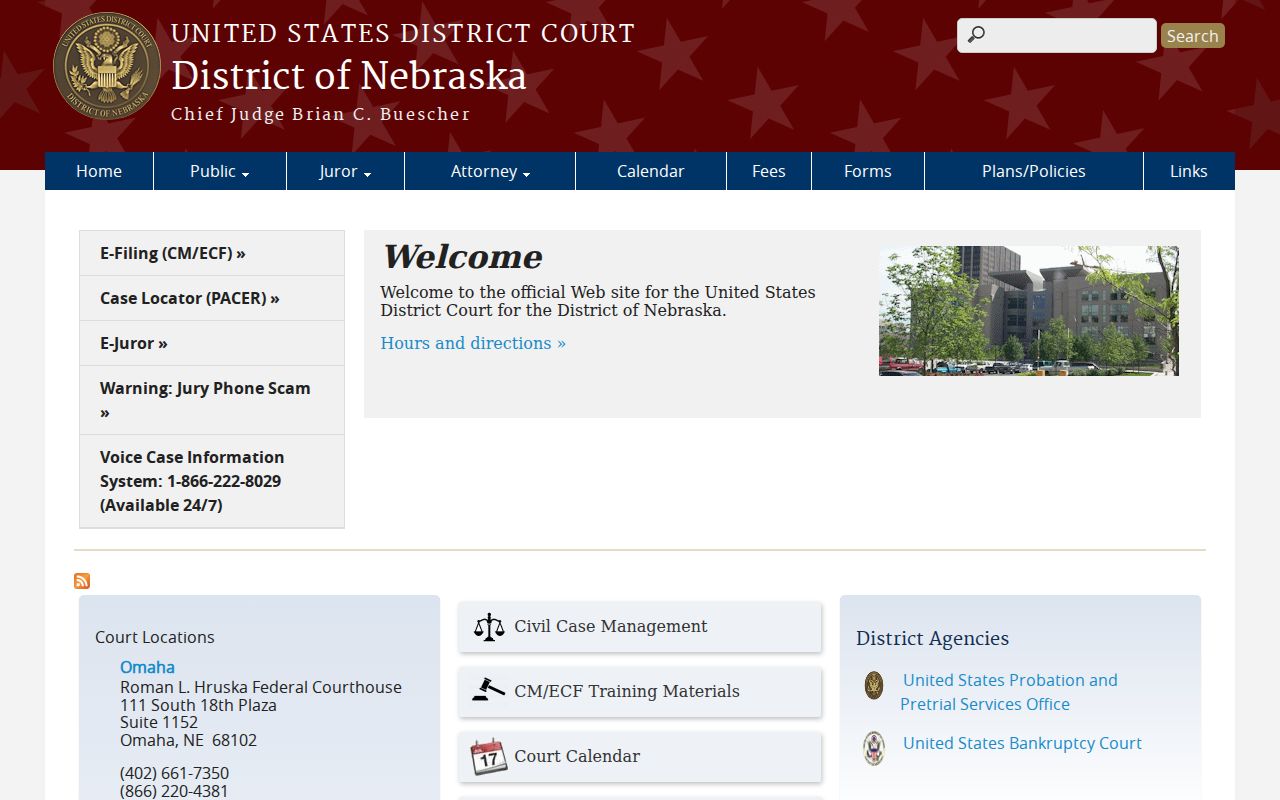
Use the federal court for federal filings and Boone County's clerk for state trial-court records.
Boone and Nebraska Court Boundaries
State and federal portals have separate coverage. A federal search should use the federal party name and docket, while a Boone County case search should use County Court and District Court filters. Local staff cannot certify a federal result, and federal staff do not keep the Boone County trial file.
The JUSTICE case-information page remains the official statewide route for Boone County trial cases.
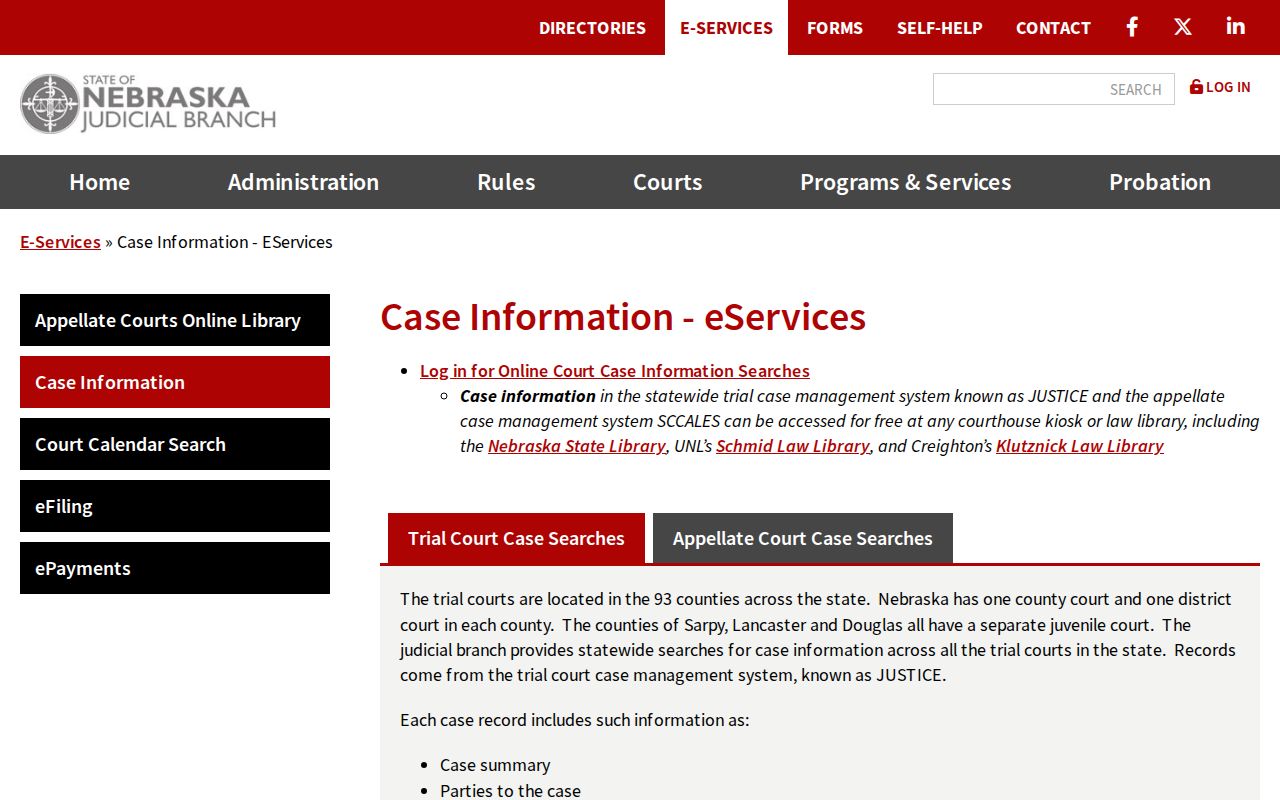
This source view distinguishes Nebraska trial-court searching from the separate federal docket channel.
Keeping the two systems separate prevents a missing result in one database from being mistaken for a clean search across both jurisdictions.