
Boone County Sex Offender Checks
The Nebraska Sex Offender Registry is the official public source for registrants connected with Boone County. It provides free name, region, and address-radius searches without an account. The Boone County Sheriff registers people locally and carries out required verification contacts. The sheriff does not publish a separate county list, so use the state system for public searching and the local office for registration or suspected noncompliance.
Choose a search method that fits the question. A name search works when the spelling is known. A Boone County region search gives a broader county view. An address-radius search checks one, two, or three miles around a location. Open the full profile before relying on a map marker or short result card.
The official Nebraska registry landing page presents those choices and its safety warning.
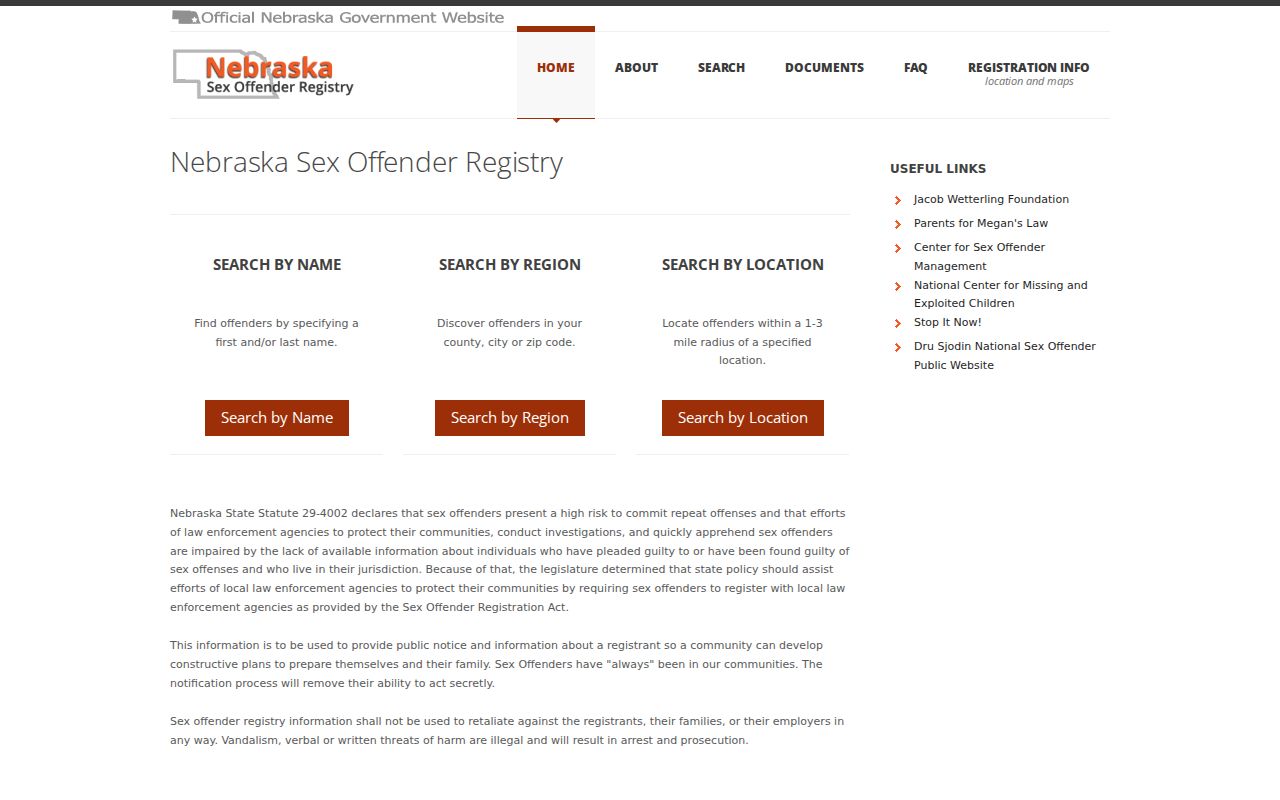
This source view is the correct starting point for a Boone County registry search.
Three Boone Registry Search Routes
The three state tools are related but not interchangeable. Name search finds spelling matches across Nebraska. Region search filters by county, city, or ZIP. Location search uses an address as the center of a chosen radius. A region result is often the sound first pass for Boone County because it does not depend on a street point geocoding correctly.
Run more than one search when the facts are uncertain. A Boone County filter can locate public profiles tied to the county even when the city name is missing from the search. A name query can then check spelling and aliases. The radius tool answers a narrower place-based question, but its map layer should always be checked against the text result.
The official name-search screen shows the spelling controls.
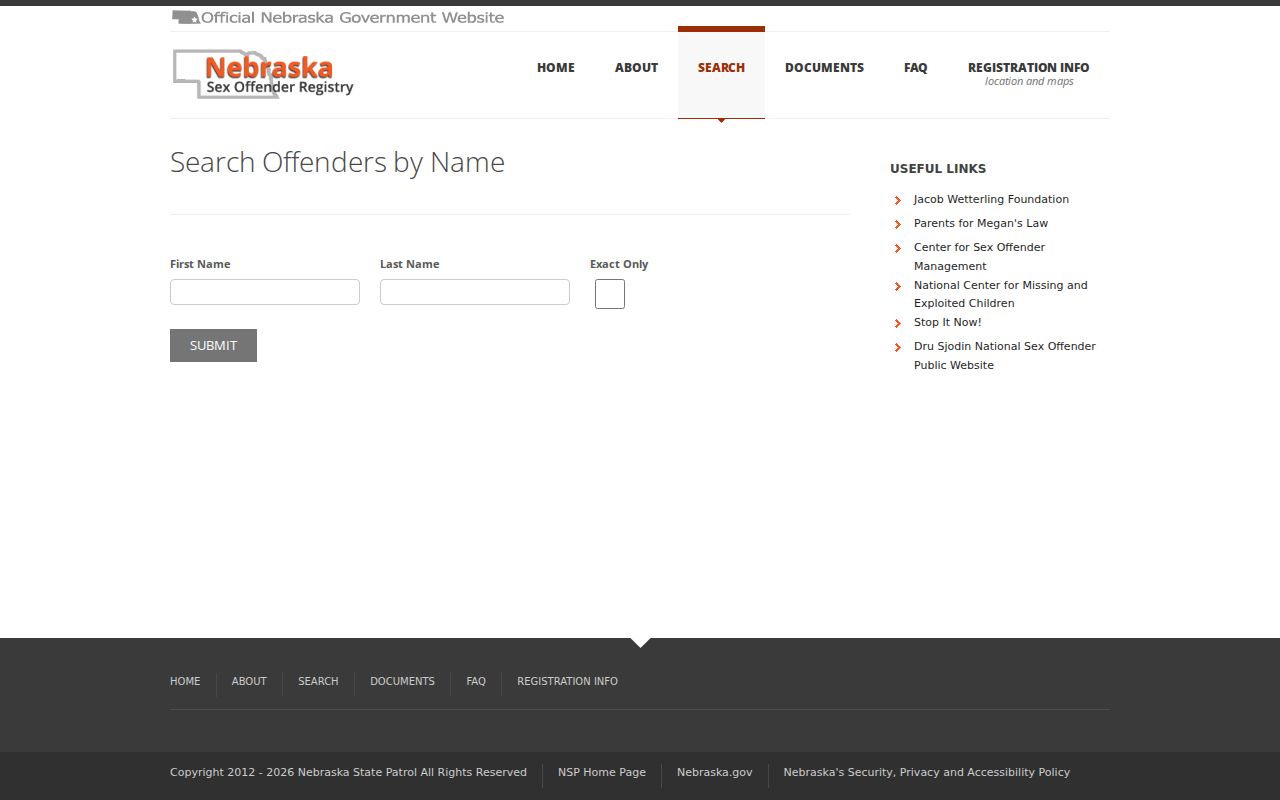
Use the exact-only box cautiously, since a broader spelling may reveal aliases or variants.
Nebraska Sex Offender Registry Searches
Start at the registry, choose the tool, and read the conditions of use. No search asks for payment or a login. The name, region, and location forms accept different fields, so switching search types can resolve an empty or uncertain result.
- Open the official Nebraska Sex Offender Registry and select name, region, or location search.
- Enter the known name, choose Boone County as the region, or supply an address and one-to-three-mile radius.
- Review all result cards and the map, matching aliases and physical details instead of relying on the name alone.
- Open the full public profile to read the qualifying offense, registration duration, address data, and compliance information.
| Search | Field | Type | Use |
|---|---|---|---|
| Name | First and last name | Text | Broad or exact spelling match |
| Name | Exact Only | Checkbox | Narrows the spelling |
| Region | County | Dropdown | Select Boone |
| Region | City or ZIP | Text or selection | Alternative regional filters |
| Location | Street, city, ZIP | Text | Sets the center point |
| Location | Search radius | Dropdown | Choose 1, 2, or 3 miles |
The registry's Boone County region tool is shown below.
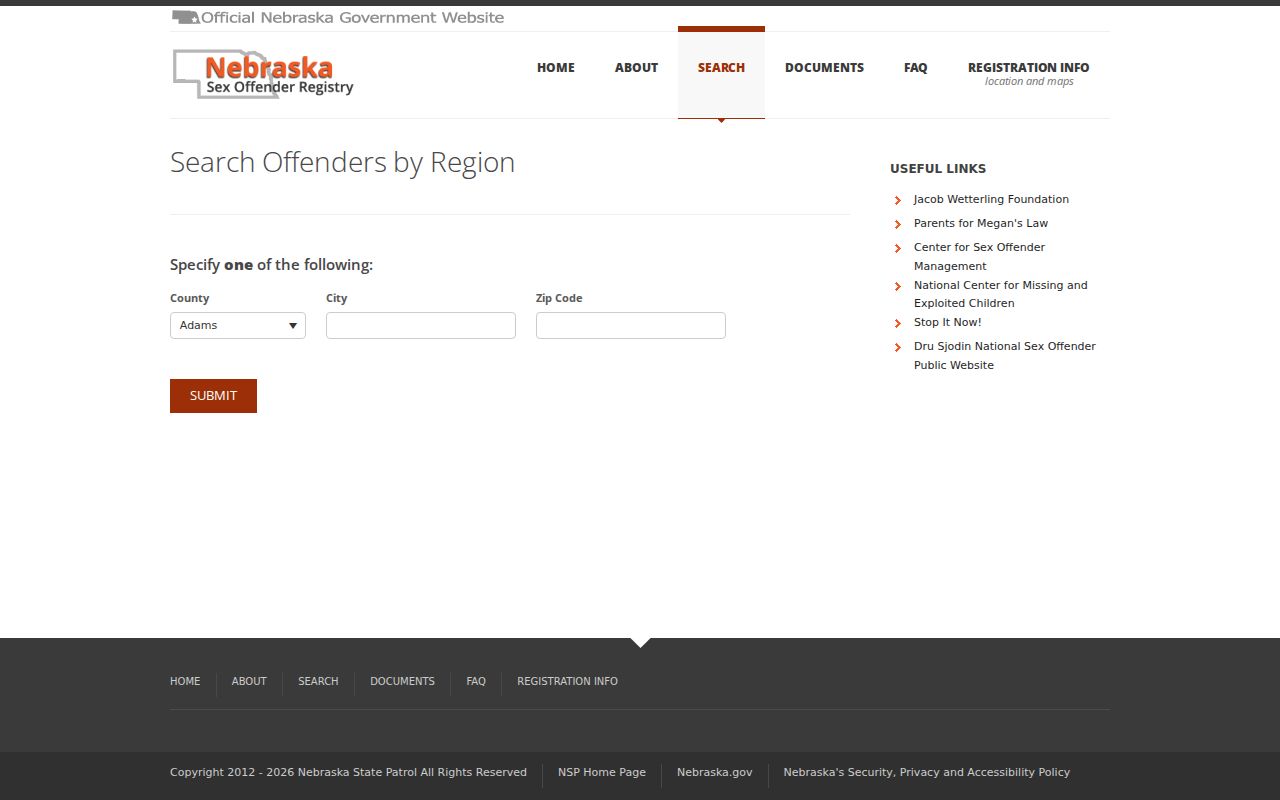
County, city, and ZIP are alternate ways to define a region rather than fields that all must be filled.
Boone Offender Radius Map Limits
An address search can show registrants within one, two, or three miles of a Boone County location. It is useful for a focused safety review, but the map is not the final record. NSP warns that it does not produce or maintain the map data and cannot guarantee error-free placement. Rural addresses and geocoding can shift a point.
The official location-search form shows the address and radius choices.
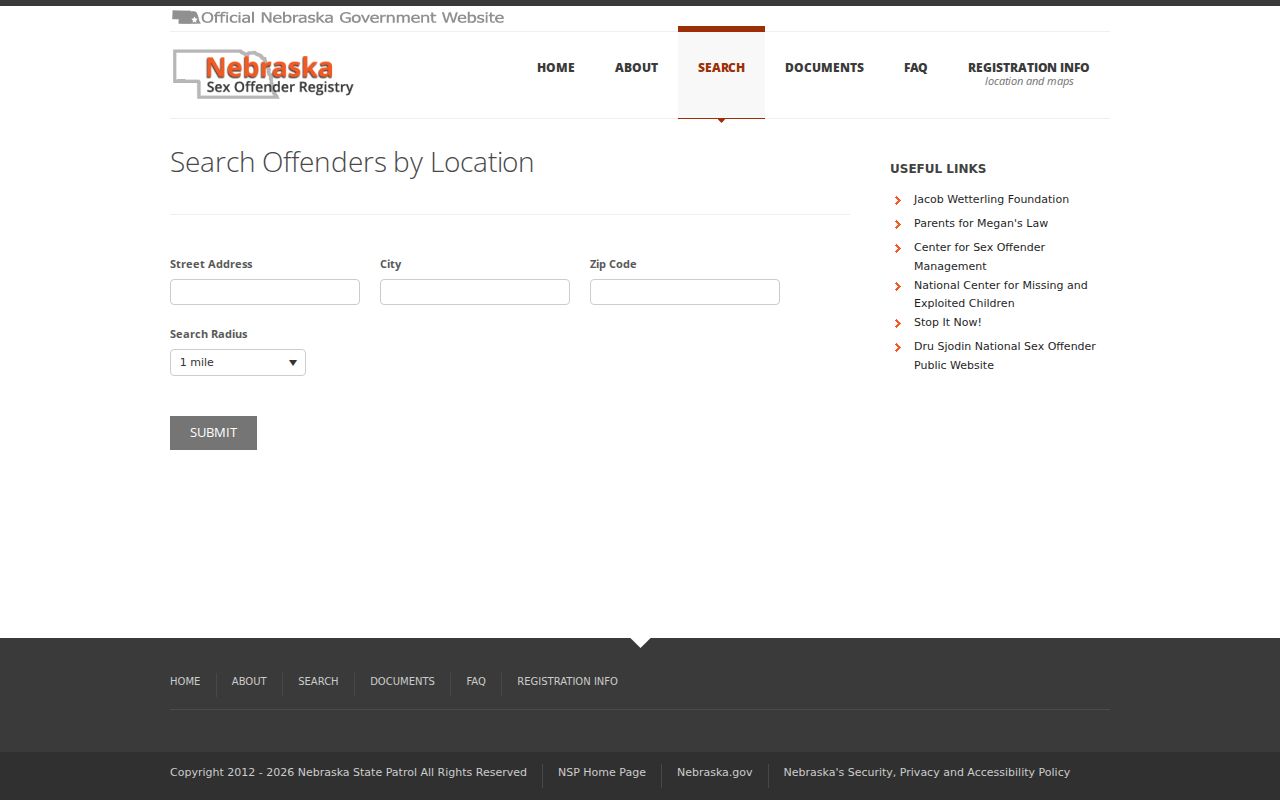
Compare the map with the result list and profile address. If the location appears wrong, report the concern to the sheriff rather than approaching the person.
Registry Profiles: What They Show
A public Boone County registry profile combines identity, appearance, address, offense, and registration data. It does not expose every item given to law enforcement. Nebraska law withholds sensitive identifiers, victim information, and other nonpublic data from the public view.
| Name and aliases | Reported names used to distinguish a registrant. |
|---|---|
| Photo and description | Photograph, sex, race category, height, weight, hair, eyes, and recorded marks. |
| Location information | Residence or address information, school information, and vehicles when public. |
| Qualifying offense | Offense, statutory link, classification, conviction, and jurisdiction details. |
| Registration term | 15-year, 25-year, or lifetime duty under Nebraska's statutory scheme. |
| Compliance information | Registration status and notice tools shown by the public profile. |
| Withheld fields | Social Security, victim identity, telephone, email, license data, and other protected items. |
A profile records statutory registration facts. It should not be used to infer facts that the profile does not state.
Compare multiple identity fields when names are alike. A photograph, aliases, physical description, conviction jurisdiction, and qualifying offense can help distinguish profiles. Public entries do not show nonconviction arrest information, travel or immigration documents, internet identifiers, email or chat identifiers, telephone numbers, driver-license data, employer names, or victim identities. Their absence is a disclosure rule, not evidence that the agency failed to collect required details.
Boone County Offender Registration
The Boone County Sheriff is the local registration point at 217 S. 5th St., Albion, NE 68620. The county's sheriff duties page confirms the office's registration role. Initial registration is generally required within three working days. NSP directs registrants to call the designated office during weekday hours for an appointment. Later changes and verification contacts also move through the affected sheriff under short statutory deadlines. Registration is free.
Boone County Sheriff
217 S. 5th St.
Albion, NE 68620
402-395-2144
Call for a registration appointment and current office hours.
The state registry unit can be reached at 402-471-8647 or nsp.sor@nebraska.gov. The Boone County phone directory confirms the local contact. Suspected address or compliance problems should go to the sheriff or agency with jurisdiction.
The local office and public portal serve different roles. Sheriff staff receive and verify registration information; the Nebraska State Patrol manages the statewide public system. A public user should not call the sheriff merely to repeat information already shown on a profile. Contact the office when the concern is a specific possible error, an apparent move, or suspected failure to report, and provide enough detail for staff to identify the entry.
Registration Levels and Duties in Nebraska
Nebraska assigns public registration periods by the offense and statutory criteria, not by the state's former public risk-level screen. Verification frequency rises with the registration term. Time spent out of compliance does not count toward completion.
| Duration | General basis | In-person verification |
|---|---|---|
| 15 years | Registrable offense not punishable by more than one year | Each year in the birth month |
| 25 years | Registrable non-aggravated offense punishable by more than one year | Every six months |
| Lifetime | Aggravated offense, prior registrable conviction, or another jurisdiction's lifetime duty | Every three months |
A person on a 15-year term may seek reduction to ten years after ten compliant years if statutory conditions are met, including no disqualifying later offense and successful completion of custody, supervision, and appropriate treatment.
The duration shown on a Boone County profile does not predict future conduct. It reflects the statute's registration category and the qualifying record. Verification means reporting to law enforcement on the required schedule. Annual, six-month, and three-month contacts are distinct from the duty to report certain changes within the separate deadlines imposed by Nebraska law.
Boone Registry Residence Rules
Nebraska does not impose one blanket statewide residence buffer on every registrant. Section 29-4017 allows a political subdivision to regulate only people who meet the statute's sexual-predator definition, and the local distance may not exceed 500 feet from a school or child-care facility. No broader Boone County rule should be assumed.
Registration status, address reporting, and residence limits are different questions. Read the profile for public registration facts, then consult the actual ordinance and statute if a legal boundary question arises. A map circle from the search tool is a search radius, not a residence-restriction line.
Note: The registry's one-to-three-mile map choice does not create or describe a legal residence boundary in Boone County.
Boone and Cross-State Offender Searches
A Nebraska search covers the state's public registry. The U.S. Department of Justice's National Sex Offender Public Website adds a cross-state layer when a person or location may connect to another jurisdiction.
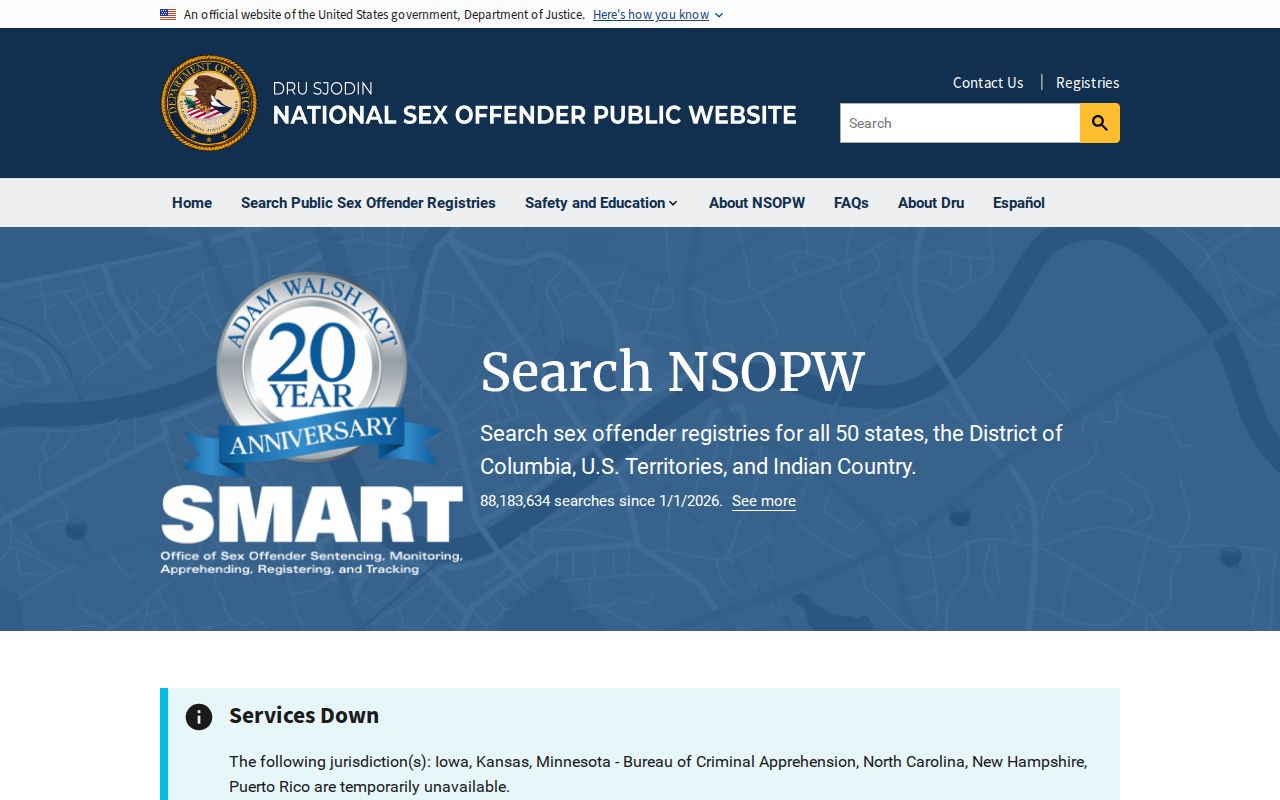
NSOPW gathers participating jurisdiction results, but the Nebraska profile remains the primary state record for Boone County details.
Custody notification is a separate task. The VINE service lets users verify participating coverage and custody-notification options.
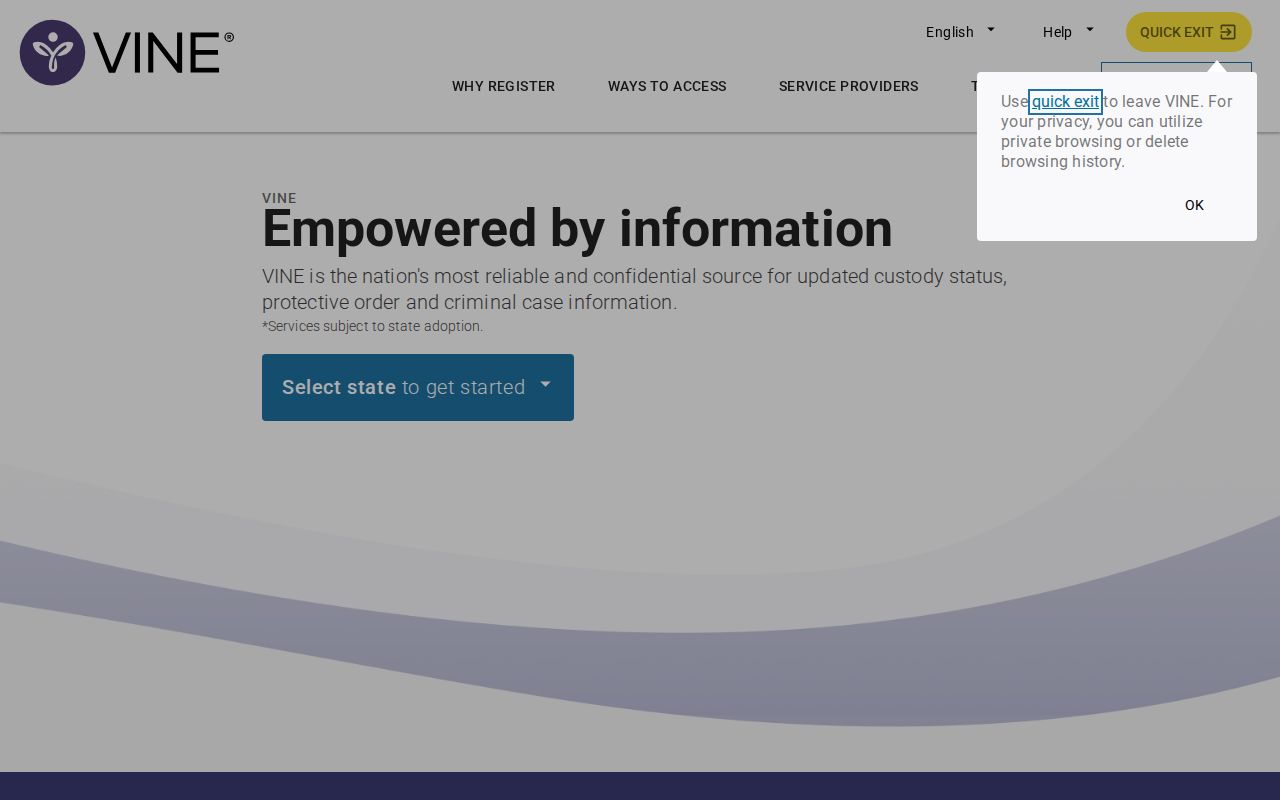
Confirm Nebraska participation inside the service, and do not treat VINE as a substitute for the sex offender registry.
Using Registry Information Lawfully
Registry information exists for community awareness and personal safety planning. It may support a careful conversation with family members, a review of the area around an address, or a report to law enforcement about possible noncompliance. It does not authorize threats, public confrontation, property damage, or harassment.
Registry misuse warning: Threats, vandalism, harassment, or vigilantism based on registry information can lead to arrest and prosecution. Nebraska disclosure rules are governed by Neb. Rev. Stat. §29-4009.
If a Boone County profile seems outdated, save the public details and contact the Boone County Sheriff. Describe the suspected issue without confronting the registrant. The sheriff or NSP can check information that the public profile does not show.
Be precise about what was observed. A suspected move, a vehicle that seems absent from the profile, or a possible registration lapse should be described as a concern rather than a conclusion. Law enforcement can compare the report with nonpublic registration data and statutory deadlines. This protects public safety while avoiding false claims based on a stale map point or a misunderstood profile field.